How to Read a Crypto Price Chart for Beginners
If you have ever opened a crypto exchange and stared at a screen full of colorful candles and zigzagging lines, you are not alone. Price charts can look overwhelming at first, but they are actually one of the most powerful tools available to any investor. Learning how to read them does not require a finance degree. With a little patience and the right guidance, even a complete beginner can start making sense of market movements and using that knowledge to make more confident decisions.
What Is a Crypto Price Chart and Why It Matters
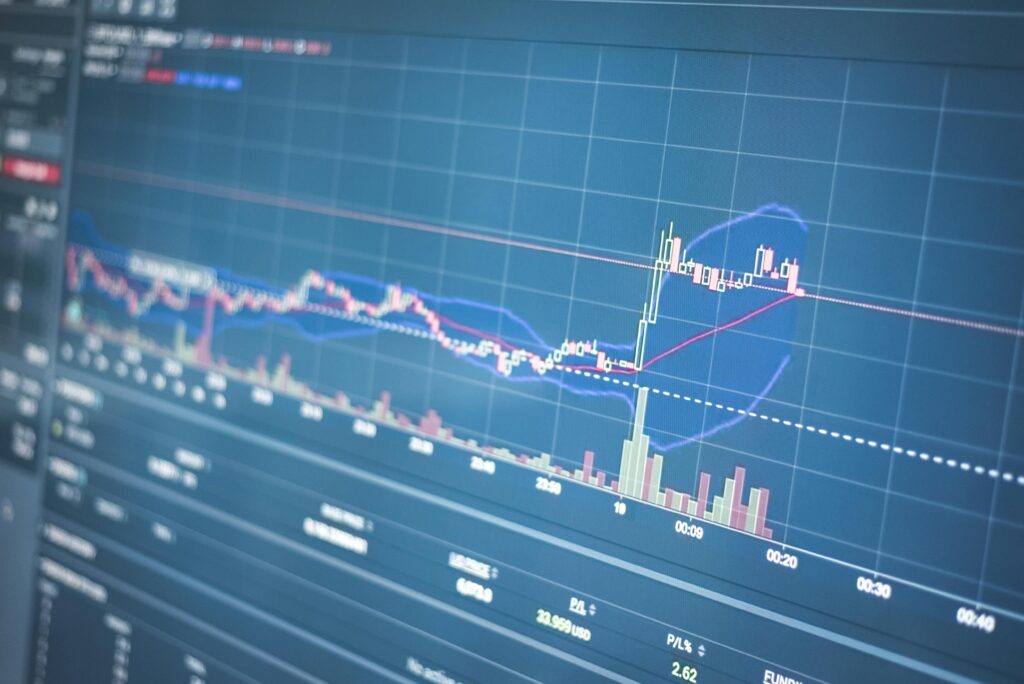
A crypto price chart is a visual representation of how the price of a digital asset has moved over time. Instead of scrolling through endless numbers, a chart lets you see the full story of a coin’s price history at a glance. Whether you are looking at Bitcoin over the last five years or Ethereum over the past 24 hours, the chart gives you context that raw data simply cannot.
Charts matter because they help you understand market behavior. They reveal patterns, trends, and key price levels that can inform your decisions. According to Binance Academy, technical analysis, which is the practice of reading charts, is one of the most widely used methods for evaluating crypto assets. It does not predict the future with certainty, but it gives you a structured way to think about probabilities.
Even if you plan to hold crypto for the long term without trading actively, understanding price charts helps you avoid common mistakes. You will know when a coin has been rising for weeks and might be due for a pullback, or when it has been falling and could be approaching a historically strong buying zone. Charts are not a crystal ball, but they are a genuinely useful map of where prices have been and where they might be heading.
Breaking Down Candlestick Charts Step by Step
The most common chart type you will encounter in crypto is the candlestick chart. Each candlestick represents a specific time period, such as one minute, one hour, or one day, depending on the timeframe you select. The body of the candle shows the opening and closing price during that period, while the thin lines extending above and below, called wicks or shadows, show the highest and lowest prices reached.
A green candle typically means the price closed higher than it opened, which signals buying pressure. A red candle means the price closed lower than it opened, indicating selling pressure. According to Investopedia, candlestick patterns originated in Japan in the 18th century and were used to track rice prices before eventually making their way into modern financial markets. Today, they are the standard for both traditional and crypto traders worldwide.
Some candlestick patterns carry specific meanings that traders watch for. A long wick at the bottom of a candle, for example, suggests that sellers pushed the price down but buyers stepped in and drove it back up before the candle closed. A very small body with wicks on both sides, called a doji, often signals indecision in the market. You do not need to memorize dozens of patterns right away. Start by simply understanding what the body and wicks represent, and the rest will follow naturally with practice.
Understanding Support, Resistance, and Price Levels
Support and resistance are two of the most fundamental concepts in technical analysis. A support level is a price zone where buying interest has historically been strong enough to stop the price from falling further. Think of it as a floor that the price tends to bounce off. A resistance level is the opposite, a ceiling where selling pressure tends to push the price back down.
These levels form because of human psychology. Traders and investors remember key price points. If Bitcoin dropped to $25,000 and then bounced sharply three times, many people will expect that to happen again. That expectation itself creates buying activity around that level, which reinforces the support. CoinDesk has written extensively about how these psychological price levels play out even in highly volatile crypto markets.
When a price breaks through a resistance level convincingly, that level can flip and become new support. This concept is called role reversal, and it is a powerful signal that market sentiment has shifted. As a beginner, simply drawing horizontal lines on your chart at obvious highs and lows is a great starting point. You do not need fancy tools to identify these levels, just your eyes and a bit of observation.
How Moving Averages Help You Spot Market Trends
A moving average is a line plotted on your chart that smooths out price data over a set number of periods. The most commonly used are the 50-day and 200-day moving averages. By averaging out the noise of daily price swings, moving averages help you see the bigger trend more clearly. When price is consistently above a moving average, the trend is generally considered bullish. When it is below, the trend is considered bearish.
One popular signal traders watch for is called the Golden Cross, which occurs when a shorter-term moving average crosses above a longer-term one. The opposite, called the Death Cross, is when the shorter-term average crosses below the longer-term one. According to Binance Academy, these crossovers are widely followed indicators that can signal major shifts in market momentum, though they work best when used alongside other analysis tools.
Moving averages are also useful as dynamic support and resistance levels. Many coins tend to bounce off their 50-day or 200-day moving averages during pullbacks within a broader uptrend. If you are storing your crypto securely on a hardware wallet like a Ledger device, tracking these indicators can help you decide when to add to your holdings during dips rather than reacting emotionally to short-term price swings.
Using Binance Charts to Make Smarter Crypto Choices
Binance is one of the most widely used crypto exchanges in the world, and its built-in charting tools are genuinely excellent for beginners. When you open any trading pair on Binance, you will find a TradingView-powered chart interface that lets you switch between timeframes, add indicators, and draw your own support and resistance lines. Everything you have learned so far can be applied directly within the platform.
To get started, select a trading pair such as BTC/USDT and click on the chart. Use the timeframe buttons at the top to switch between daily, weekly, or hourly views. Add a moving average by clicking the indicators menu and searching for "MA." You can customize the period to 50 or 200 depending on what you want to track. Binance Academy also offers free tutorials that walk you through each tool in detail, which is a great complement to what you are learning here.
The key is to keep things simple in the beginning. Many beginners fall into the trap of adding too many indicators at once, which creates confusion rather than clarity. Start with candlesticks, a couple of moving averages, and a few support and resistance lines. Over time, you will develop your own style and approach. The goal is not to predict every move but to build a consistent process for evaluating what the market is telling you.
Key Takeaways
- Candlestick charts are the standard in crypto trading and show you the open, close, high, and low of a price over any given time period.
- Support and resistance levels are key price zones where buying or selling pressure has historically been strong, and they help you identify potential turning points.
- Moving averages smooth out price data and help you identify the overall direction of a trend, with the 50-day and 200-day being the most commonly watched.
- Binance offers powerful free charting tools powered by TradingView, making it one of the best platforms for beginners to practice reading charts in real time.
- Keep your analysis simple when starting out. Focus on a few core concepts, practice consistently, and build your knowledge gradually over time.
Sources
- Investopedia. "Candlestick Definition." https://www.investopedia.com/terms/c/candlestick.asp
- Binance Academy. "What Is Technical Analysis?" https://academy.binance.com/en/articles/what-is-technical-analysis
- Binance Academy. "What Is a Golden Cross?" https://academy.binance.com/en/articles/what-is-a-golden-cross
- CoinDesk. "How to Read Crypto Charts." https://www.coindesk.com/learn/how-to-read-crypto-charts/
Category: Crypto for Beginners
Disclaimer: This article is for educational purposes only and does not constitute financial advice. Cryptocurrency investing involves significant risk, and you should always conduct your own research before making any investment decisions. Never invest more than you can afford to lose.