The first wallet I ever set up, I got the seed phrase wrong. Not catastrophically, I hadn’t sent anything yet, but I wrote it down in the wrong order and didn’t realize until I tried to restore it weeks later on a new phone. My stomach dropped for about ten minutes before I found my mistake. Nobody warns you how easy that is to do.
That’s really the whole reason this guide exists. A crypto wallet isn’t complicated once you understand it, but the small details matter more than people expect, and the best crypto wallets for beginners are the ones that make those small details hard to get wrong.
- Non-custodial wallets give you full control of your private keys; custodial ones (like exchange wallets) don’t.
- Trust Wallet, MetaMask, and Coinbase Wallet are the easiest mobile starting points for beginners.
- Exodus and Electrum are solid desktop options depending on how many coins you hold.
- A hardware wallet like Ledger is the right move once you’re holding anything you’d genuinely hate to lose.
Why Your First Wallet Choice Actually Matters
When you’re just starting out, the wallet you choose shapes almost every experience you’ll have with your crypto. There’s no customer service hotline to call if you send funds to the wrong address or lose your recovery phrase, which is exactly why getting this first decision right matters more than it might seem to at first.
It also helps to understand the basic split early on. Custodial wallets, like the ones built into exchanges, hold your private keys on your behalf. That’s convenient, but it means you’re trusting someone else with the actual keys. Non-custodial wallets give you full ownership instead, which is the standard I’d point any beginner toward once they’re ready to move past just buying and holding on an exchange.
The Easiest Mobile Wallets to Start With

Trust Wallet is genuinely one of the friendliest entry points available. It’s non-custodial, supports an enormous range of blockchains including Bitcoin, Ethereum, Solana, and BNB Chain, and includes a built-in browser for exploring Web3 apps without any extra setup. It’s owned by Binance but operates independently as its own app.
MetaMask Mobile remains the default choice if you’re specifically interested in Ethereum and the wider EVM ecosystem. Its interface has genuinely improved over the past couple of years, and the built-in swap feature means you can trade tokens without leaving the app.
Coinbase Wallet, not to be confused with the Coinbase exchange app, rounds out the top tier. It’s non-custodial, easy to set up, and if you already use the Coinbase exchange, linking the two makes moving funds between them simple.
If you want the full walkthrough on choosing between a software wallet like these and a hardware device, I covered that comparison in How to Store Crypto Safely: Hot vs Cold Wallets.
Desktop Wallets Worth Knowing About
Exodus is the standout desktop option for most beginners. It’s free, well-designed, supports over 300 cryptocurrencies, and includes a built-in exchange and portfolio tracker so you can see everything at a glance.
Electrum has been around since 2011 and has earned a genuinely rock-solid reputation, particularly among Bitcoin holders. It’s less polished visually than Exodus, but it’s lightweight, fast, and highly secure if you’re specifically Bitcoin-focused.
Atomic Wallet supports over 1,000 coins and includes staking features directly in the app, which is appealing if you want to earn a little passive income without navigating a separate platform entirely.
The Wallet I Use to Keep My Bitcoin Safe.
Get My Ledger Now →When It’s Time for a Hardware Wallet
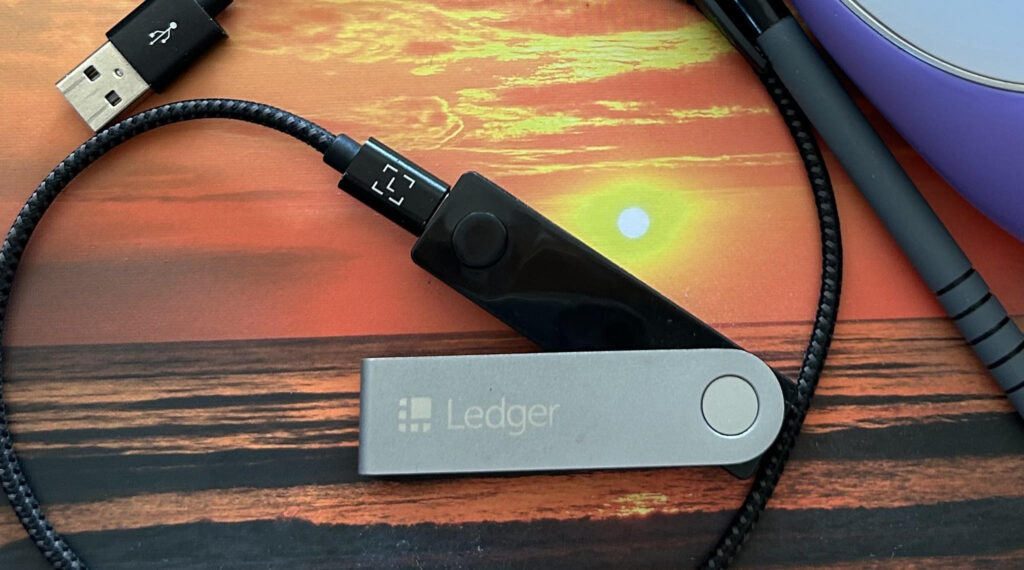
Once you’re holding anything you’d genuinely hate to lose, moving to a hardware wallet is one of the smartest steps you can take. Ledger remains the name I trust most heading into 2026, and it makes two models worth knowing about.
The Ledger Nano X is the fuller-featured option, connecting via both Bluetooth and USB-C, and it can store up to 100 apps at once so you’re not constantly swapping between coins. The Ledger Nano S Plus is the more affordable sibling, connecting via USB-C only, but offering essentially the same core security at a lower price point. Either one is a genuine upgrade over leaving anything meaningful on a software wallet long-term.


How to Actually Choose

Be honest with yourself about how you plan to use crypto. If you’re dipping your toes in with a small amount and want to explore DeFi or NFTs, a mobile wallet like Trust Wallet or MetaMask is completely reasonable, and you can layer in a hardware wallet later once your holdings grow.
Whichever you choose, the one habit worth building immediately is writing down your seed phrase correctly, and storing it somewhere physically safe rather than digitally. I learned that lesson the slightly stressful way, so hopefully you don’t have to.
FAQs
What’s the difference between a custodial and non-custodial wallet?
A custodial wallet, like an exchange account, holds your private keys for you. A non-custodial wallet gives you full control of the keys yourself.

Which wallet is easiest for a complete beginner?
Trust Wallet or MetaMask Mobile, since both are free, quick to set up, and don’t require much technical background.
Do I need a hardware wallet right away?
Not necessarily. It becomes worth it once you’re holding an amount you’d genuinely be upset to lose.
Is it safe to use a wallet owned by an exchange, like Trust Wallet?
Yes, Trust Wallet is non-custodial, meaning it doesn’t actually hold your keys even though Binance owns the company behind it.
What happens if I lose my seed phrase?
Your funds become permanently inaccessible. There’s no recovery option, which is exactly why writing it down carefully and storing it safely matters so much.
Can I use more than one wallet at once?
Yes, and many people do, using a software wallet for everyday use and a hardware wallet for long-term storage.
Have a question I didn’t cover? Leave it in the comments below and I’ll get back to you.
Sources: Wallet security and setup guidance drawn from official provider documentation, including Trust Wallet’s security center, MetaMask’s support library, Coinbase Wallet’s help center, Exodus’s knowledge base, the Electrum wallet documentation, and Ledger’s own security and device guides. Seed phrase best practices reflect widely-used industry security standards for non-custodial wallet management.
New articles, straight to your inbox.
Whether you’re just curious or already investing, you belong here.
Join HereNot Sure Where to Start? Grab My Free Crypto Starter Guide.
Get the Guide Now →
Written by Yana Ballantyne
Founder of Yadala · Crypto Educator · Swiss Real Estate Advisor
Yana is a German-born, Australia-raised investor with two decades of experience across property, shares and crypto. She founded Yadala to make crypto simple and accessible for women — without the jargon or the overwhelm. She recommends platforms she believes in but will never tell you which coin to buy. That decision is always yours.
Disclaimer & Affiliate Disclosure
This article contains affiliate links. If you purchase through these links, I may earn a small commission at no extra cost to you. I only recommend products and services I personally use and genuinely believe in. Your support helps me keep Yadala running and free to read — thank you.
The content on Yadala is for informational and educational purposes only. Nothing here constitutes financial, investment, or legal advice. I am not a licensed financial advisor. All opinions expressed are my own personal views based on my own research at the time of writing.
Cryptocurrency and Bitcoin investments are highly volatile and speculative. The value of digital assets can rise and fall dramatically, and you could lose your entire investment. Regulatory changes may also significantly impact the value or legality of cryptocurrency in your country. Never invest more than you can afford to lose completely.
Yadala and its author accept no liability for any financial loss or damage arising from decisions made based on information in this article. Always conduct your own research and consult a qualified financial advisor before making any investment decisions.